Hypnotherapy for Fear of Escalators: Support for Escalator Anxiety and Avoidance
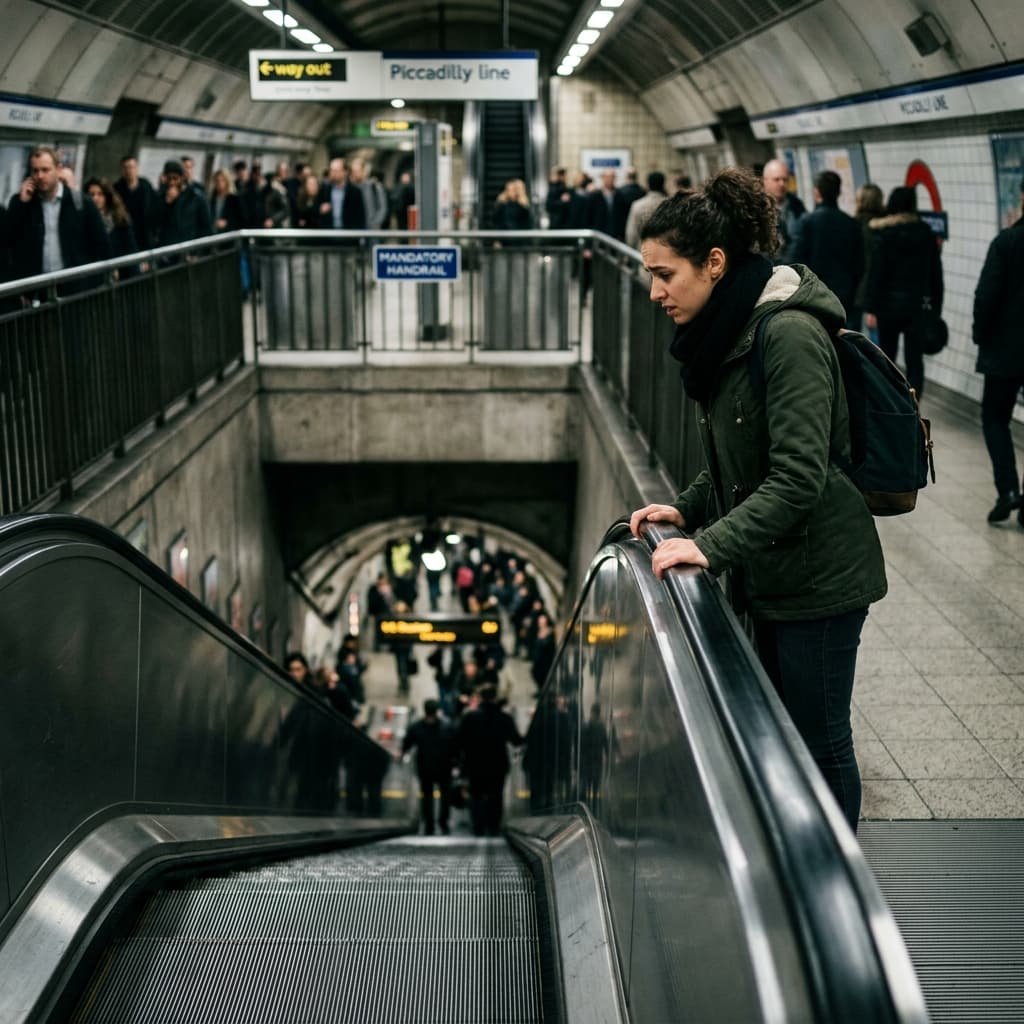
An escalator looks harmless until your body decides it is a moving trap.
Everyone else steps on without thinking. One foot, then the other. They keep talking, hold a coffee, check their phone, and glide upward like nothing unusual is happening.
Meanwhile your nervous system is doing mathematics.
How fast are the steps moving? Where exactly does the first step appear? What if the foot lands wrong? What if the shoe catches? What if someone behind you rushes? What if the top arrives too quickly and the exit plate feels impossible?
That is why people search for hypnotherapy for fear of escalators. Not because they need another lecture about escalator safety. They usually know escalators are ordinary public infrastructure. The problem is that the body reacts as if stepping on one is a high-risk event.
This guide explains why escalator anxiety can feel so intense, how hypnotherapy may support the automatic fear response, what sessions can look like, and how to find a practitioner who understands phobias, panic sensations, balance concerns, avoidance, and public-place anxiety.
Important note: Hypnotherapy is a complementary approach. If you're experiencing significant symptoms, please consult a qualified healthcare provider.
What is fear of escalators?
Fear of escalators is anxiety, panic, hesitation, or avoidance connected to using escalators.
Some people avoid only long or steep escalators, such as those in train stations, airports, shopping centres, stadiums, or underground transit systems. Others feel anxious even on short escalators in department stores. The fear may appear when stepping on, riding, stepping off, looking down from the escalator, or seeing someone else use one.
Common experiences include:
- freezing at the entry point while people queue behind you
- waiting for a gap that never feels long enough
- gripping the handrail hard or avoiding the moving handrail completely
- feeling dizzy, unsteady, hot, shaky, or unreal
- worrying about falling, tripping, or being pulled into the mechanism
- fearing a shoe, bag, clothing, or pram will get caught
- avoiding malls, airports, stations, or multi-level venues
- taking stairs or lifts even when they add time or stress
- feeling embarrassed because other people seem comfortable
- replaying the moment afterwards and dreading the next escalator
Escalator anxiety can overlap with fear of heights, claustrophobia, panic attacks, balance concerns, injury memories, sensory sensitivity, fear of falling, or anxiety about being watched in public.
The escalator becomes more than moving stairs. It becomes a timed performance with an audience, a moving surface, a narrow entry point, and no easy pause button.
Why escalators can trigger such a strong response
Escalator anxiety often makes sense when you break down the mechanics.
The task demands timing, balance, movement, and commitment. The steps emerge from a flat plate, become stairs, move beneath the body, then flatten again at the top or bottom. For a calm brain, this sequence is automatic. For an anxious nervous system, every part of the sequence becomes something to monitor.
The threat system may start before the escalator is even close.
The eyes scan the speed, the crowd, the height, the gap between steps, the handrail, the metal teeth at the end, the people behind you, and the distance to the exit. The body prepares for danger: muscles tighten, breathing changes, attention narrows, and balance can feel less reliable.
Then the sensations become part of the fear.
A person may think, "What if I wobble?" The body tightens, which can make movement feel less natural. They may think, "What if I hold everyone up?" The social pressure rises. They may think, "What if I cannot step off in time?" The exit plate becomes the main threat.
Avoidance reinforces the loop.
Taking the lift brings immediate relief, and relief teaches the subconscious, "Avoiding the escalator kept us safe." Next time the alarm starts earlier. Eventually the fear may begin when planning a trip, entering a shopping centre, seeing a station map, or noticing that the lift is out of service.
Hypnotherapy may help by working with the automatic prediction, the body response, the mental rehearsal, and the avoidance pattern that keeps the fear alive.
How hypnotherapy may support escalator anxiety
Hypnotherapy for fear of escalators usually focuses on helping the mind rehearse the escalator sequence differently before the real moment arrives.
A practitioner may use guided imagery, relaxation, anchoring, ego-strengthening, Ericksonian hypnotherapy, NLP-style reframing, parts work, or future pacing. The method varies, but the practical target should be clear: support a steadier response when approaching, stepping on, riding, and stepping off an escalator.
This is not about forcing someone to use escalators before they feel ready. A good practitioner will not shame avoidance or turn the session into a dare. The goal is to help the nervous system update its response so the escalator feels less like a threat and more like a manageable task.
In a session, the practitioner may guide the sequence in stages:
- seeing an escalator from a distance without immediately bracing
- approaching while staying aware of the floor, breath, and surroundings
- watching the steps appear without rushing the decision
- placing one foot, then the other, with a calmer internal rhythm
- riding while the body remains oriented and steady
- preparing for the exit plate before panic surges
- stepping off and registering completion
That last part matters. Anxiety often rushes past success. The mind gets through the moment, then immediately worries about next time. Future pacing helps the brain encode a different ending: approach, step on, ride, step off, continue with the day.
What a session might look like
A first session usually begins with a careful map of the fear.
The practitioner may ask when the fear started, which escalators are hardest, whether stairs or lifts create similar anxiety, whether height or falling is the main issue, whether crowds make it worse, and what happens in the body at the entry and exit points.
For some people, the strongest moment is stepping on. For others, it is the top of a downward escalator. Some worry about falling forward. Some worry about being trapped by people behind them. Some feel embarrassed more than physically unsafe. The work should match the actual pattern, not a generic script about relaxation.
A session may include:
- a physical settling technique for the first wave of alarm
- imagery rehearsal of a short, quiet escalator before a busy one
- anchoring a calm cue to use before stepping on
- reframing the moving steps as a rhythm instead of a hazard
- mental rehearsal of standing upright, breathing naturally, and looking where helpful
- practice with the exit moment, especially the final two seconds
- confidence-building around handling a wobble, pause, or awkward moment
Some practitioners may also suggest between-session practice, but it should be realistic. Watching escalator videos, standing near an escalator, using a quiet escalator with support, or practising at low-traffic times may be more useful than forcing a busy transit-station escalator too early.
How long does it take?
There is no universal number of sessions.
Some people use hypnotherapy for a narrow fear linked to one specific memory or one specific setting. Others have a wider pattern involving panic, dizziness, public embarrassment, injury history, fear of heights, or multiple forms of avoidance. The broader the pattern, the more carefully the work usually needs to be paced.
Many people begin with a short course of sessions and review progress as they go. A practitioner might work first on body regulation, then imagery rehearsal, then future pacing for real-world escalators. If panic symptoms, trauma memories, vestibular issues, or major daily impairment are involved, it may be sensible to involve a qualified healthcare provider or mental health professional alongside hypnotherapy.
The useful question is not, "How fast can this be gone?" It is, "Can this work help my nervous system respond differently enough that my choices open back up?"
When fear of escalators affects daily life
Escalator anxiety can look small from the outside. It is not small if it changes where someone can go.
A person may avoid train stations, airports, shopping centres, concert venues, office buildings, hospitals, hotels, or stadiums. They may plan entire routes around lifts. They may feel trapped when a lift is broken or a staircase is closed. They may arrive early to avoid crowds or decline invitations because the venue layout is uncertain.
This is where the anxiety becomes about more than the escalator. It becomes about freedom of movement.
Hypnotherapy may be one part of rebuilding that freedom. It can support the internal rehearsal, the body response, and the confidence to approach situations in a more measured way. Practical planning still matters too: choosing quieter times, wearing secure footwear, travelling with support at first, and checking access options when needed.
If the fear is connected to dizziness, fainting, falls, neurological symptoms, medication effects, or significant balance problems, seek medical advice. Hypnotherapy should not replace appropriate assessment for physical symptoms.
Choosing a hypnotherapist for escalator anxiety
When looking for support, choose someone who takes the fear seriously instead of brushing it off as silly.
Useful questions include:
- Have you worked with phobias, panic sensations, or public-place avoidance?
- How do you handle fears involving movement, balance, or heights?
- Do you use future pacing or graded mental rehearsal?
- Will sessions include practical coping strategies for the moment of stepping on and off?
- How do you pace the work if the client feels embarrassed or pressured?
- What would suggest I should also speak with a healthcare provider?
A good practitioner should be able to explain the process clearly, avoid guarantees, respect your pace, and keep the work grounded. If they promise instant results, dismiss medical concerns, or make the fear sound ridiculous, keep looking.
You can start by browsing practitioners through Hypnotherapy Finder, or reading more about hypnotherapy for anxiety and how hypnotherapy works before choosing someone.
Is hypnotherapy right for fear of escalators?
Hypnotherapy may be worth considering if escalator anxiety is limiting travel, shopping, work, appointments, public transport, or social plans.
It may be especially relevant when the fear feels automatic: the logical mind understands the situation, but the body reacts anyway. That automatic layer is exactly where hypnotic rehearsal, suggestion, imagery, and nervous-system settling may be useful.
The aim is not to become reckless. The aim is to make ordinary movement feel ordinary again.
For someone who has been planning life around lifts, detours, and exit routes, that can be a meaningful shift: walking into a station, seeing the escalator, stepping on, stepping off, and letting the moment end there.
Looking for a qualified hypnotherapist?
Browse our directory of verified professionals to find the right match for your needs.
Search Directory